
Traditionally, endoscopes have been reprocessed using the method of high-level disinfection (HLD). HLD kills harmful pathogens, but does not sterilize the device. Also, what about those crevices in complex devices and hard-to-reach areas inside long, narrow lumens? Finally, what happens after high-level disinfection? How do you keep instruments sterile until the point of care? Andersen Sterilizers provides the solution.
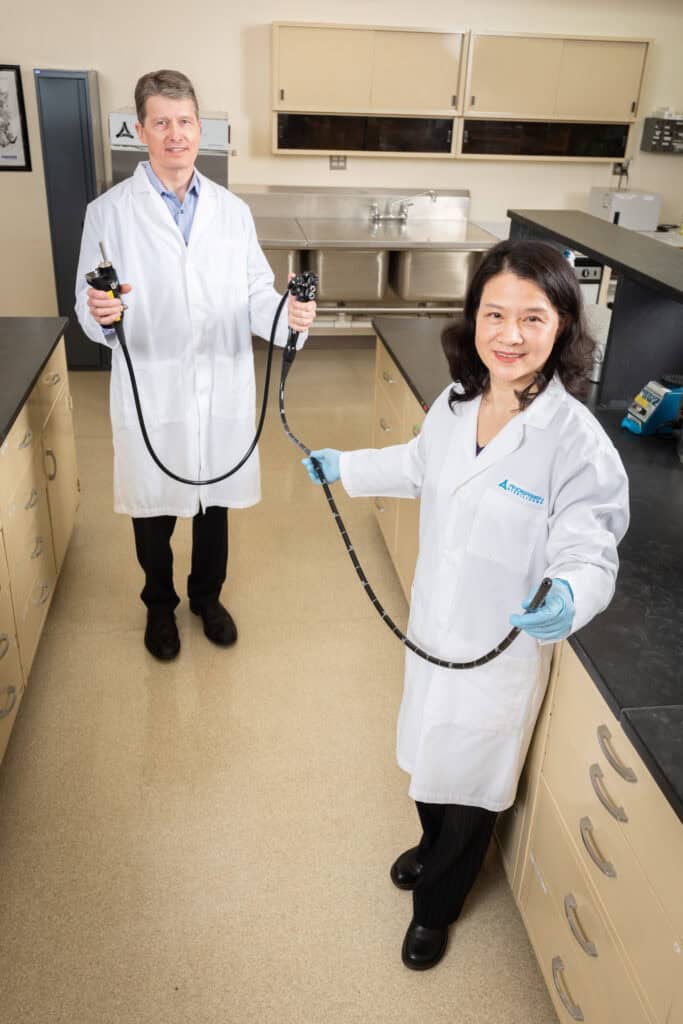
Dr. Bill Andersen and Chief Scientist Jenny Zhang hold a long-lumen endoscope used for 510k testing.
Sterile Until the Point of Care
What happens to a device between the end of the sterilization cycle and the moment an instrument is used on the next patient? That gap is one of the biggest sterile processing challenges hospitals face, and it’s where the right sterilization method matters most. The moment a device is exposed to air outside the sterilization chamber after reprocessing, it is no longer sterile, as it could be exposed to any number of airborne contaminants.
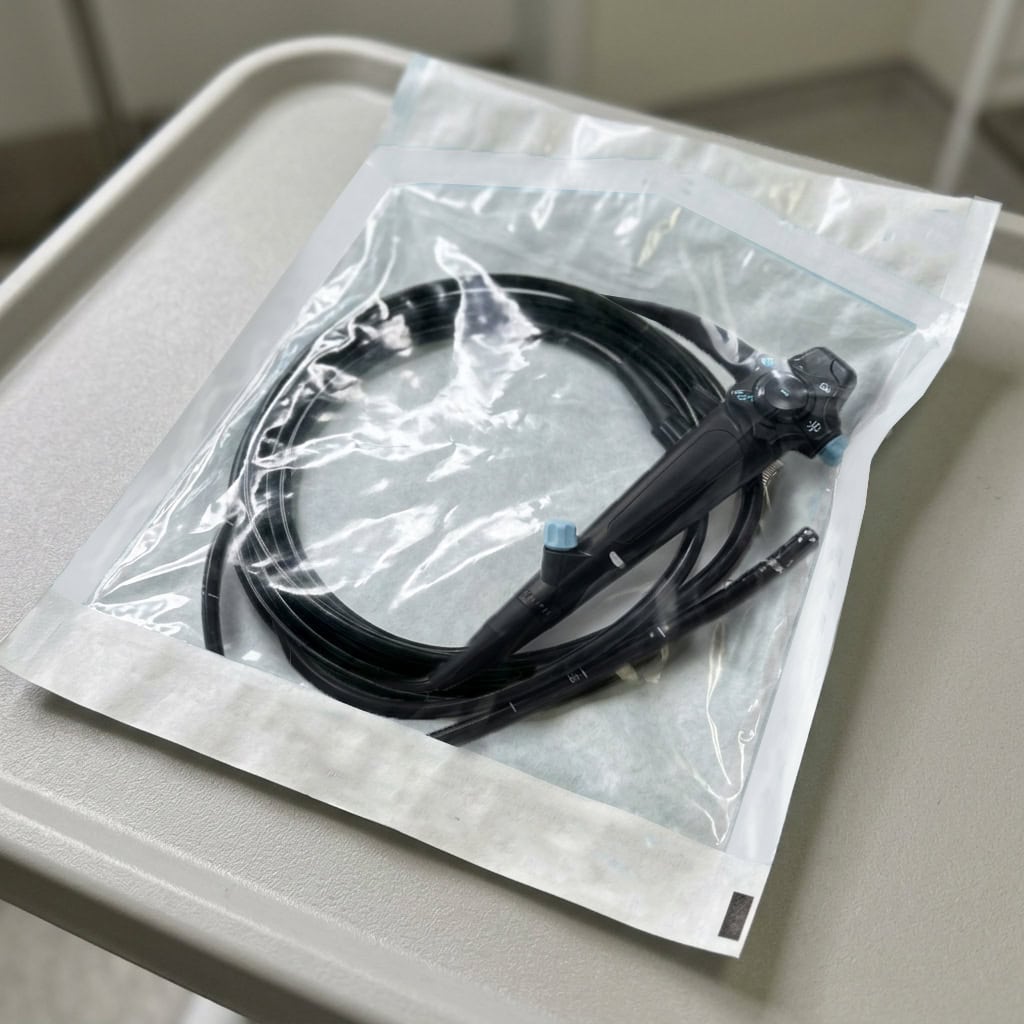
EOGas 4PLUS terminally sterilizes devices, including endoscopes with over 1.1m lumens. Instruments are sterilized inside a sealed Tyvek pouch and stay sterile until it is opened at the point of care, delivering packaged, sterile devices ready for use or storage. This protects against the recontamination risk that comes with every transfer, shelf, cart, and handoff. No unprotected stretch between your SPD department and the procedure room.
Terminal Sterilization with EO vs. High-Level Disinfection
High-level disinfection reduces microbial load but does not eliminate all pathogens. Sterilization is lethal to all microbial life, including spores from resistant bacteria, like E. Coli, Staph Aureus, and Clostridium Difficile. That is an important distinction when devices that enter sterile body cavities are involved. Andersen’s EOGas 4PLUS can stop these infections before they start. By effectively sterilizing complex and delicate medical devices at 10⁻⁶ SAL, our technology can prevent infections, protect your most vulnerable patients, and support safe, high-quality care.
Built for Heat-Sensitive, Lumened Devices
EOGas 4PLUS uses a small dose of ethylene oxide (EO) at low temperatures—up to 90% less EO than traditional rigid chamber systems—to penetrate long, narrow lumens and intricate channels, reaching internal surfaces that are difficult to access. This low-temperature process helps protect the delicate optics, electronics, and materials in endoscopes and robotic instruments that cannot withstand heat or moisture.
What this means for your facility:
- Reduced risk of recontamination with terminal sterilization and protection of instruments through storage and transport.
- Greater inventory flexibility by allowing sterilized, packaged devices to be stored until needed, rather than reprocessed on demand.
- Preservation of delicate devices through a low-temperature sterilization process designed for heat-sensitive materials.
- Support for compliance and quality assurance with validated sterilization cycles and an FDA-cleared process that achieves a sterility assurance level of 10⁻⁶.
The Gold Standard of Sterility, From Processing to Patient Care
You know how much depends on having properly sterilized instruments—and ensuring they remain protected until the moment of use.
EOGas 4PLUS offers an FDA-cleared solution at 10⁻⁶ SAL for endoscopes and other delicate or complex instruments in a package that protects that sterility until the moment of care.
Andersen Sterilizers helps you carry confidence beyond the sterilization cycle. With dedicated service and support, we can help your facility build a reliable, compliant terminal sterilization program tailored to your needs.
Explore Andersen Sterilizers’ EOGas 4PLUS and learn how it can support your instrument reprocessing workflow.
Spread the Word

Expert Guidance for Your Needs
Tell us about your sterilization requirements — our experts are here to guide you to the perfect EO solution.